Mapping the Industrial Revolution
Inequalities Institute, March 2026
Technology: Geographic Distribution
An initial mapping of the emergence of new technologies in the UK, by county.
Management: Geographic Distribution
An initial mapping of the rise of management jobs in the UK, by county.
Apprenticeship System: Total Participation
The apprenticeship system declines everywhere between 1851–1911. The decline is more rapid after 1881. Less urban areas seem to retain more of the system than elsewhere. What is somewhat surprising is how different the decline is by level of skill — apprenticeships decline only slightly over the period; it is Masters and Journeymen who disappear.
Apprenticeship System: Role Breakdown
Occupational Skills Inheritance
| Occupation | 1851 | 1861 | 1881 | Difference | OccScore | SonsScore |
|---|---|---|---|---|---|---|
| Coal Miners | ||||||
| Farmer, Grazier | ||||||
| Bricklayer | ||||||
| Mason | ||||||
| Carpenter, Joiner | ||||||
| Agricultural Labour | ||||||
| Blacksmiths | ||||||
| Butchers | ||||||
| Tailors | ||||||
| General Labour | ||||||
| Gardener | ||||||
| Innkeepers |
Two Channels of Intergenerational Mobility
The evidence points to two distinct mechanisms through which a father's position in the occupational structure shapes his son's outcomes — and they work very differently.
The Parent Channel
The father's position in a thriving trade transmits directly to the son: skills, capital, networks, connections within the ethnic economy or the local industry. Sons inherit not just the occupation but the platform the father built. This is the Kastis & Vipond mechanism — organisational practices and community resources create opportunities the son can leverage.
The Local Labour Market Channel
Being in an area where a trade is booming creates better opportunities locally, regardless of what the father specifically passes on. The place is doing the work, not the family. This is the Abramitzky et al. (2021) mechanism — immigrants sort into better locations, and it is geography that drives the mobility advantage.
The Parent Channel
Two very different industries — immigrant tailoring and domestic bootmaking — tell the same story. Where the father's trade is thriving, sons are protected from downward mobility and channelled into higher-status occupations when they leave. Where it is contracting, sons scatter across the full hierarchy, and a substantial share fall far below their fathers.
Tailors: Pale of Settlement Sons vs. English Sons
Sons of Pale-born tailors (1891 census) linked forward to 1911. Every father is a tailor — the comparison is purely about what happens to the next generation, conditional on the same starting point. Tailors sit at the 68th percentile of the 1911 workforce.
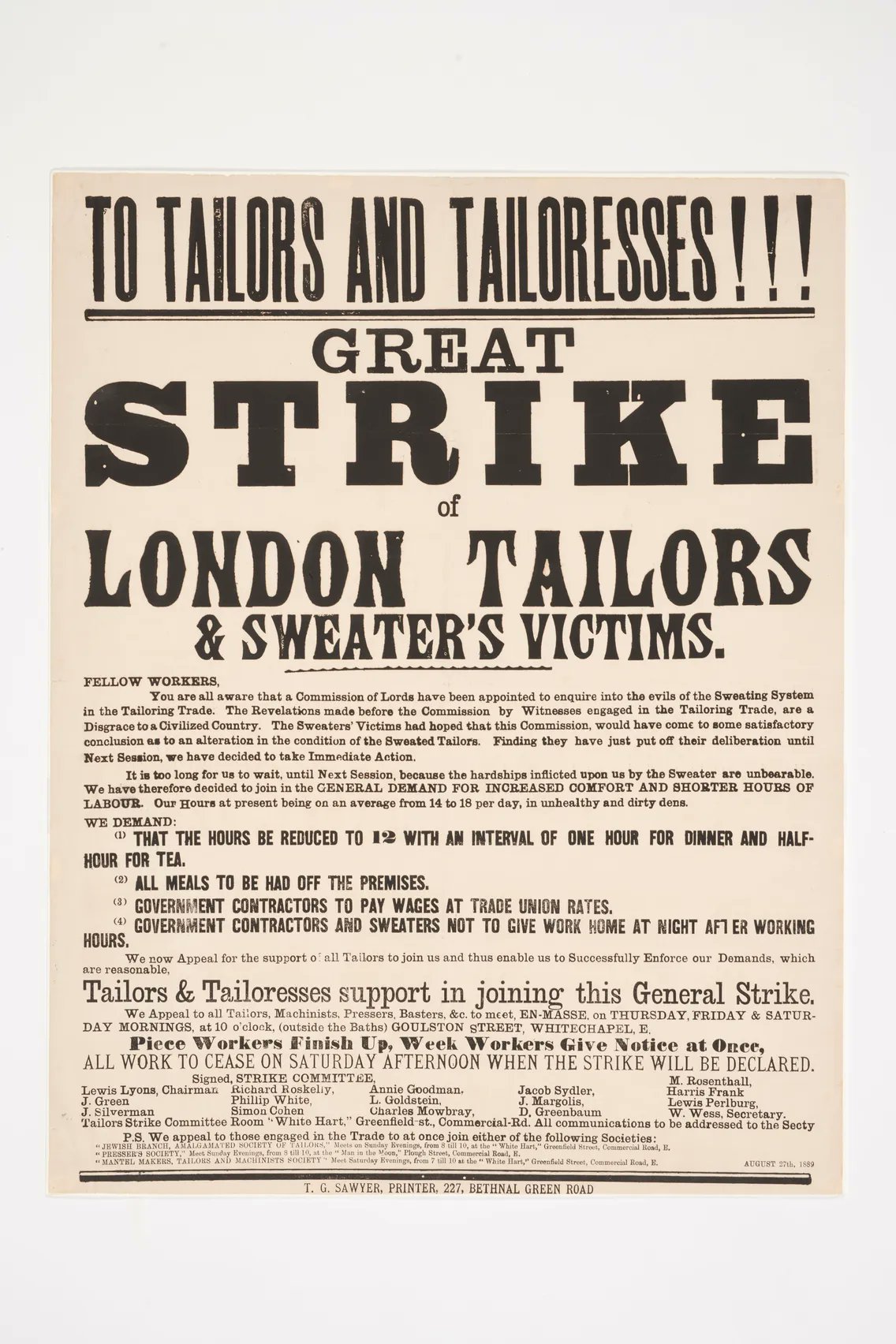
- Jewish immigrants from the Pale of Settlement entered the tailoring trade from the 1880s onwards, concentrated in London's East End, Leeds, and Manchester.
- They brought organisational practices — finer division of labour, subcontracting networks — that accelerated sewing machine adoption in ready-to-wear production.
- The ethnic economy provided both a floor (preventing falls into unskilled labour) and a ladder (channelling leavers into commercial and retail occupations).
- Every father in both samples is a tailor. Same occupation, same time, different origin.
Mean rank change (percentile points)
Direction of movement
Bootmakers: Growth vs. Decline Counties
Sons of bootmaker-headed households linked forward 30 years (1851→1881 and 1861→1891). Counties classified by employment change in bootmaking: Growth (Northamptonshire, Leicestershire), Steady, and Decline (38 of 42 counties). Bootmakers sit at the 54th percentile of the workforce.
Occupational Inheritance Rate
Share Becoming General Labourers
The Local Labour Market Channel
Who fills the new jobs when an industry grows? The maps below show where new jobs emerged in three sectors — bootmaking, management, and electrical trades — and who the fathers of those workers were. If geography is doing the work rather than family transmission, we expect to see the new workers drawn from a wide range of father occupations, not concentrated in the same trade as their fathers.